
Insect scale robots for a human scale world.
Robots small enough to get inside the places people and conventional machines can't reach, so they can be inspected without being taken apart.
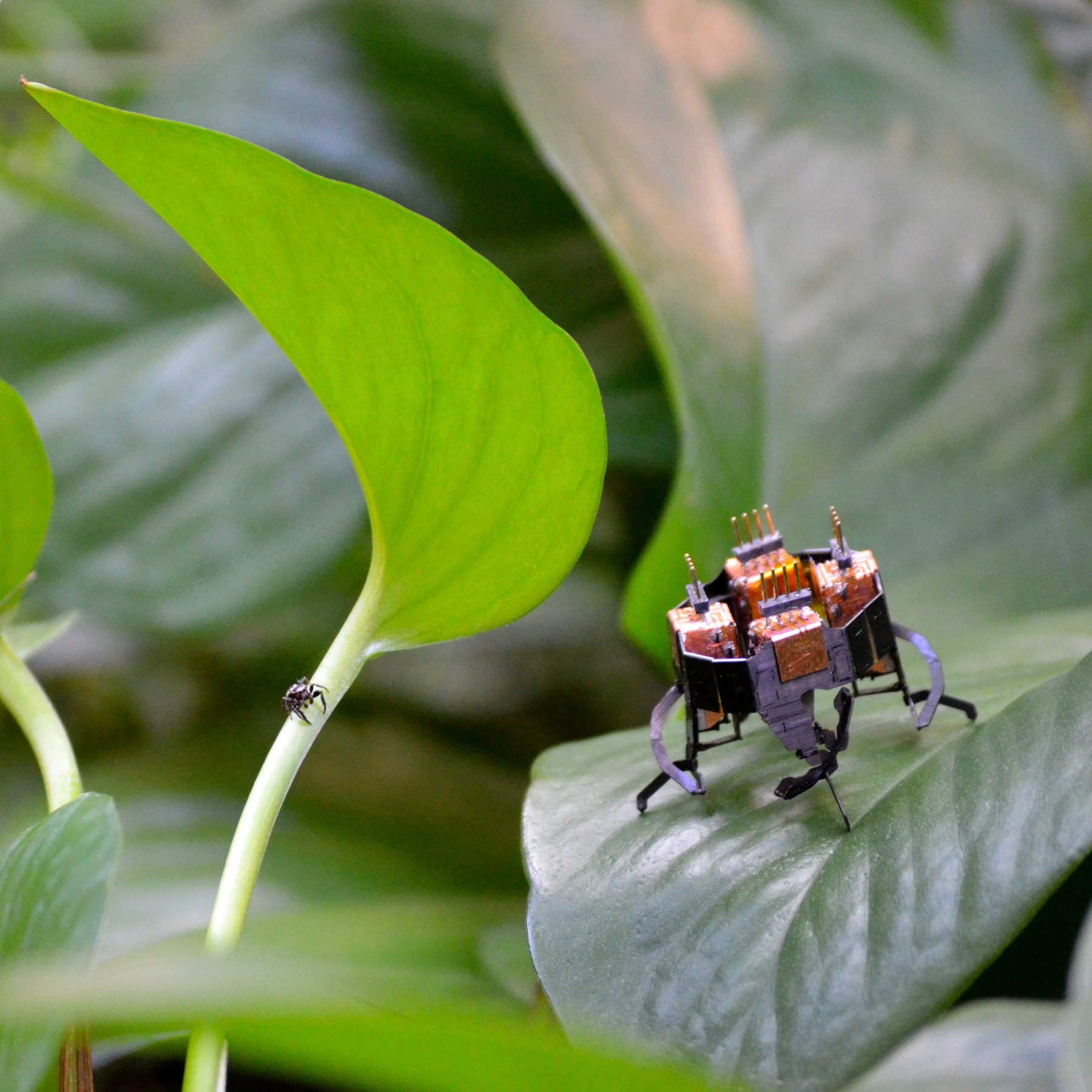
Inspection shouldn't mean taking things apart.
The built world needs inspection, and today that usually means taking things apart, with the downtime and lost revenue that follow. The machines and structures we depend on have cramped, hidden and often hazardous interiors that need manual inspection and specialised tooling. Centimetre-size robots, small enough to get inside, agile enough to move and capable enough to sense, uniquely solve this.
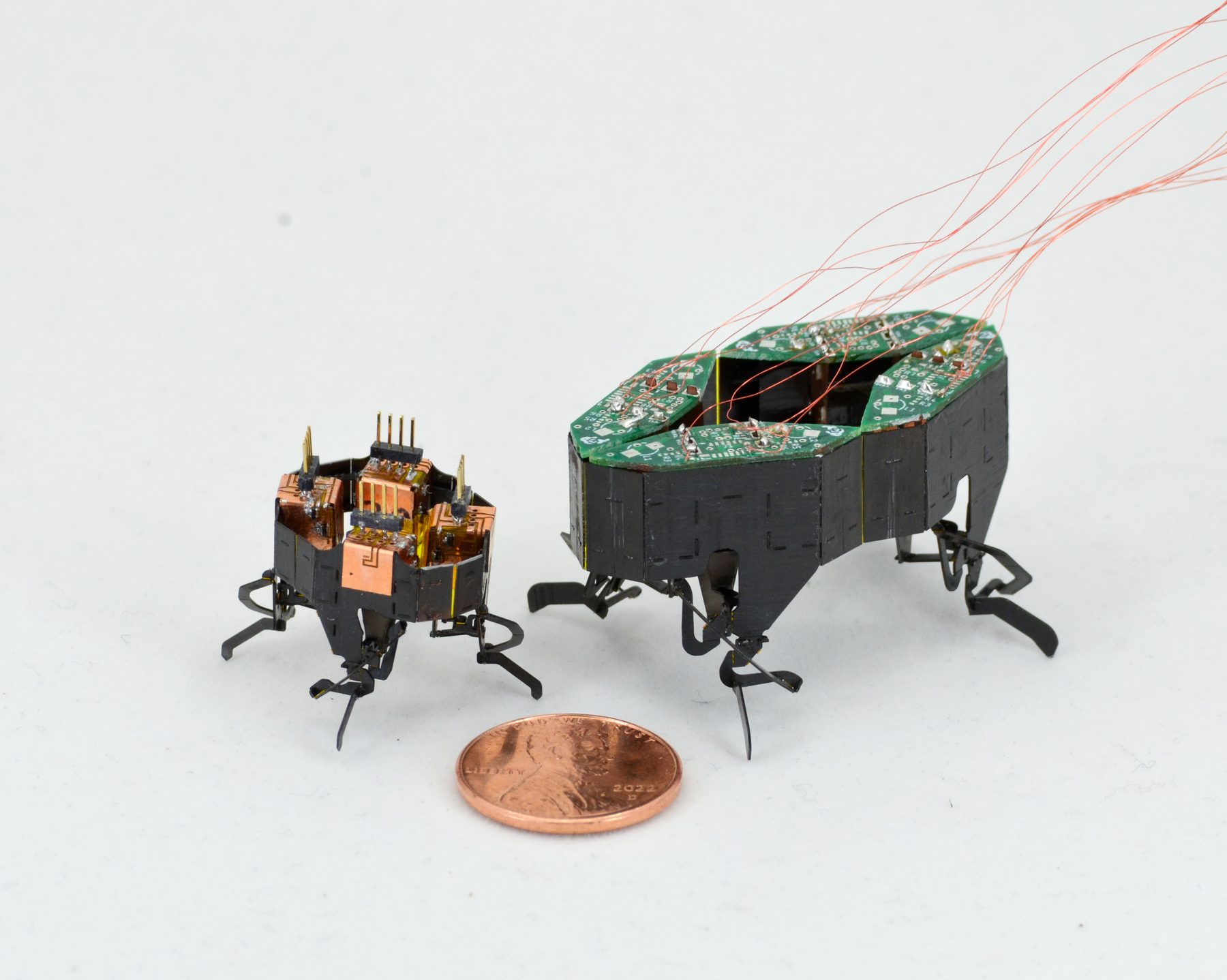
Built layer by layer, like an insect.
Using kirigami design and biological locomotion strategies, our robotic insects are built layer by layer from laminated sheets of smart materials. Weighing a couple of grams, like their insect counterparts, they run over complex ground and climb walls and ceilings, reaching confined spaces beyond people and conventional machines to collect vital structural health data.
Small enough to get in. Fast enough to matter.

Small matters beyond access
Modular systems
Common building blocks, configured for each task.
More than vision
Sensing beyond what a camera can see.
Can't damage the asset
Light enough to be harmless to what they inspect.
Cheap, disposable
Low cost, so robots are replaced, not retrieved.
Continuous monitoring
Small enough to stay in place and keep checking.
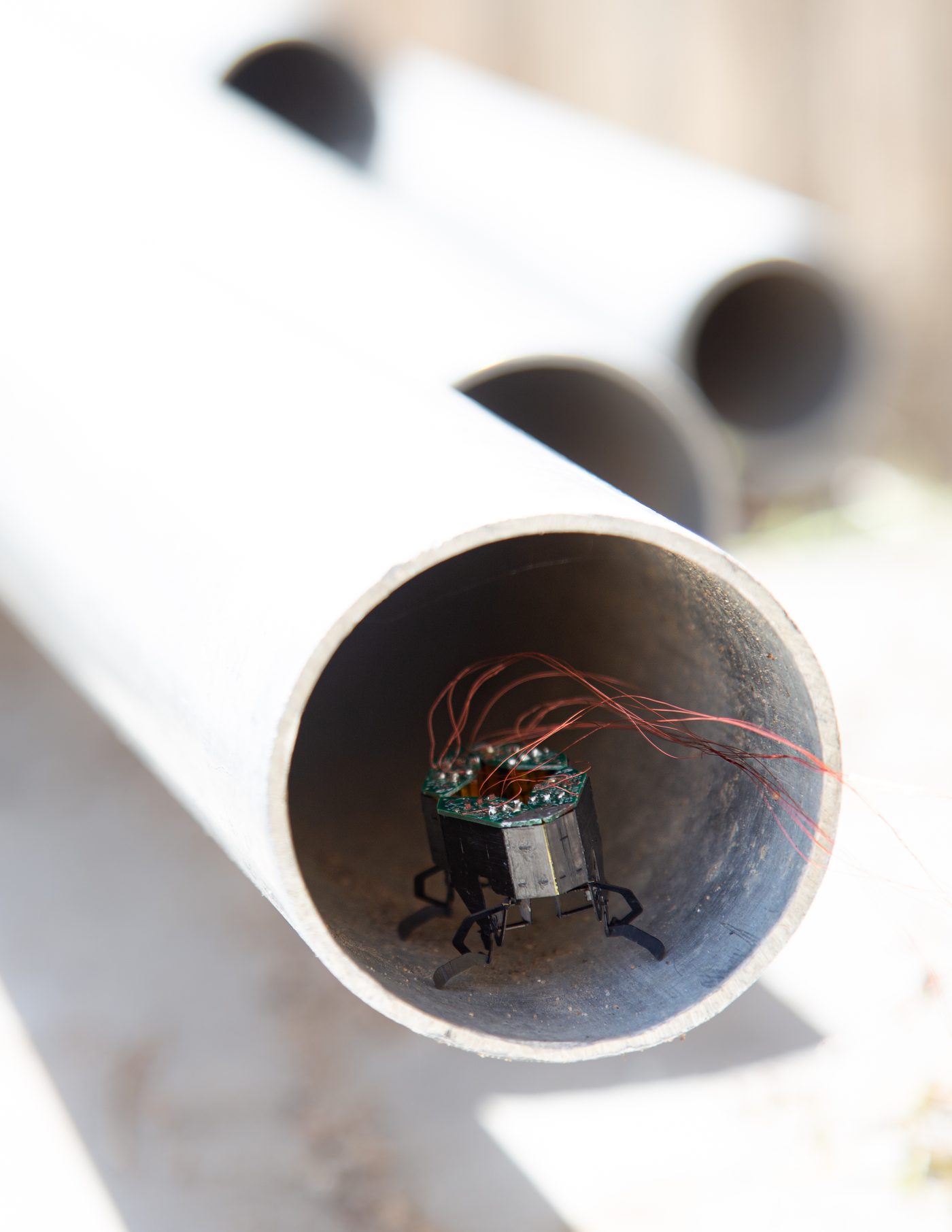
Wherever it's hard to reach.
Anywhere there are hard-to-reach places, these robots can go: inside machinery, behind panels, through pipes and into the hidden interiors of essential infrastructure. We aim to prevent failures, reduce hazardous work and extend asset life by making inspection possible without taking things apart.